I have been getting quite a bit of push-back
lately from tenants who don’t see the value in signing off a Deed of
Lease.
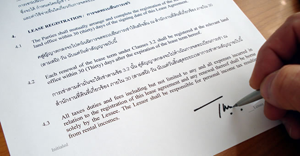
Firstly most don’t realise that the Agreement to Lease is not
“The Lease” and secondly I suspect they don’t appreciate being obliged
to spend more money on legal fees.
A Deed of Lease by it’s nature encompasses more detail and covers for
more eventualities than a standard Agreement to Lease. When I first
started it was common to use the BOMA format which was 38 pages and then
over the years various versions of the Auckland District Law Society
form have become standard (15 pages including cover) with increasingly
more tenant friendly clauses.
Tenants are contracted to sign a Deed of Lease by virtue of a clause in
every Agreement to Lease, and if they are lucky a good agent is able to
negotiate out of having to pay the landlord’s legal costs for this. I
think it is simply prudent if the tenant understands his obligations and
responsibilities when committing to a lease arrangement. Most tenants
enter into a lease contract in good faith and expect to pay the rent for
the term but I suspect few know what happens when they cannot pay or
when they wish to leave. Rent reviews are a major minefield and tenants
should understand how to best navigate through this process. Many people
do not know the difference between a Right of Renewal and a rent review
and I assure you they are very different things. I used to describe
myself as a ‘bush lawyer’ where I might do my best to explain the
differences of these items but these days under the current regime it is
dangerous to offer such advice and I always advise potential tenants to
discuss the terms with their lawyer.
A Deed of Lease provides certainty of contract, it encompasses
numerous events like what happens when you leave or are struck by a
disaster like an earthquake. The Agreement to Lease which an agent
usually prepares, covers the commercial terms and the major and
pertinent points. Agents strongly prefer prefer not to engage in the
minutiae of the Deed because it will usually bog proceedings down into
the fine detail and they prefer the Deed to be negotiated by the 2
lawyers acting for each side. May I suggest you make sure that the
Agreement to Lease expressly declares that the Agreement and the Deed
shall not merge and the Agreement shall remain in full effect which
simply means that the Agreement sits on top of the Deed and where any
item in the Agreement will prevail over the Deed.
Lastly a signed Deed of Lease is a more easily enforceable document
should the need arise. It is not common that a tenant needs to take
legal action against a landlord but it certainly does happen in cases of
failure to provide quiet enjoyment, maintenance issues or to enforce
due process for an “unreasonable” rent review.
Tenants sign your Deed!